












Transforming crew operations at Lufthansa
Flawless implementation, incredible expertise, teamwork, and commitment from the entire IBS team. They went above their mandate to manage a complex project within a specified time and budget.
Client overview
Deutsche Lufthansa AG is a German airline which along with its subsidiaries is Europe's largest carrier in terms of passenger volume as well as fleet size. The fleet of over 280 aircraft (615 including subsidiaries) currently serves 18 domestic and 197 international destinations spread across 78 countries and covering Africa, the Americas, Asia, and Europe.
Lufthansa is one of the five founding members of the Star Alliance, the world's largest alliance of commercial airlines. It also owns several passenger carrier brands such as Austrian Airlines, Swiss International Air Lines, Eurowings and Germanwings (referred to by Lufthansa as its Passenger Airline Group) and several aviation-related companies such as Lufthansa Technik as part of the Lufthansa Group.
Lufthansa + IBS: A longstanding bond
Since 2011, IBS has been successfully engaged in providing new generation IT solutions to enable the key business goals of Lufthansa and its various subsidiaries. The relationship began with IBS creating an integrated cargo application platform (iCAP) for Lufthansa Cargo AG (LCAG) to replace their legacy Unisys platform, thereby unlocking considerable cost savings for the airline.
This was based on the iCargo platform from IBS, which has since then been utilized to consolidate the IT landscape at LCAG, bringing in a thorough digital transformation to enhance the customer experience and greatly reduce complexity. IBS today plays a critical role in maintaining the highest of quality standards for the LCAG IT landscape by functioning as the Test Factory for their systems.
The context: Crew management at Lufthansa
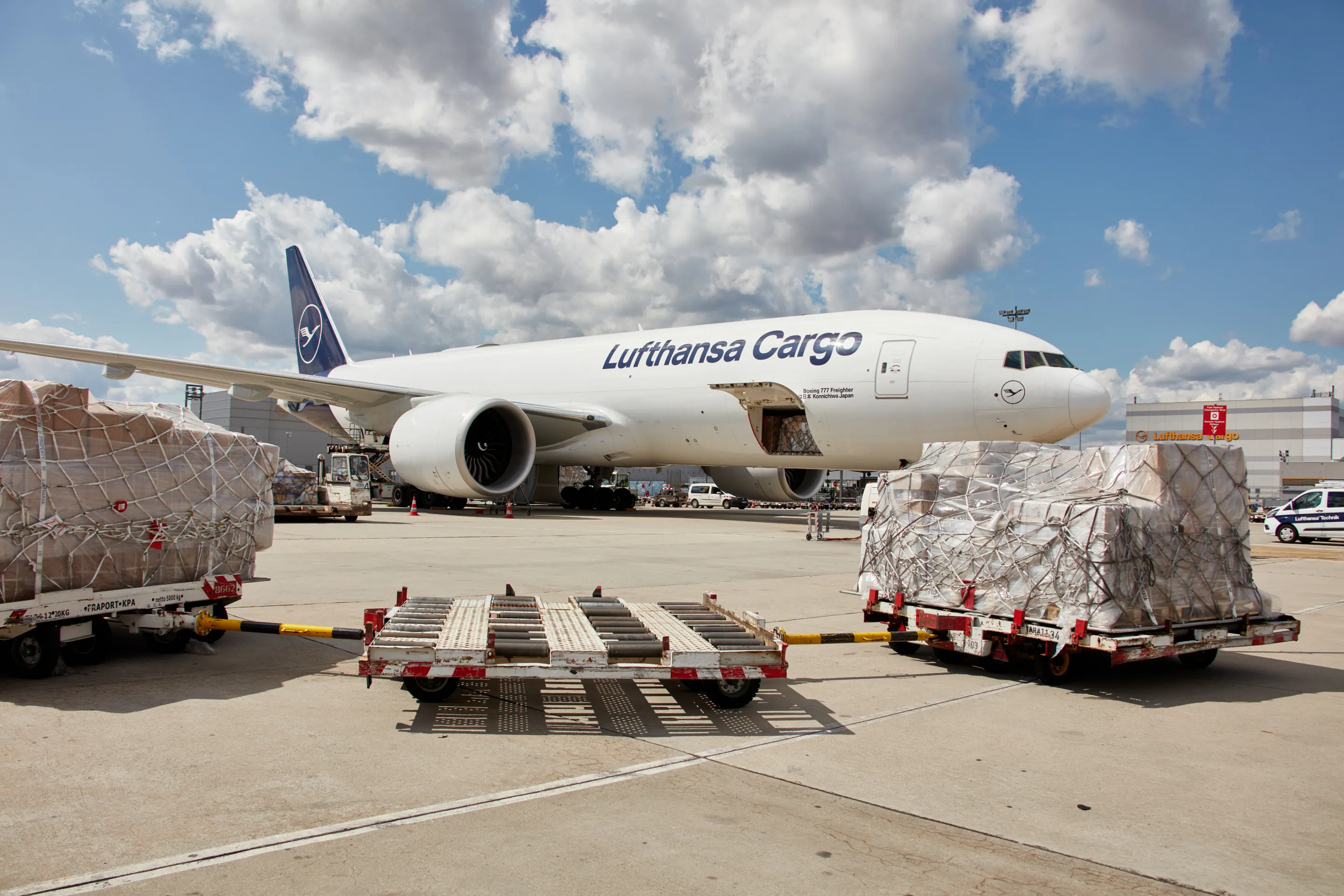
Lufthansa Passage and Lufthansa Cargo together account for around 28,000 crew members (5,000 pilots & 23,000 cabin crew) in 2,000 flights on a daily basis. Crew member allocation and deployment at Lufthansa used to run in a highly complicated environment that evolved over more than three decades, with components ranging between new and over 40 years old.
At the center of it all was a Unisys mainframe that acted as the framework on which the actual Roster and Pairing systems worked. It also held data, business rules and the relational logic which controlled communication between the system components. This supported several crew-related business processes such as management of crew accommodation, Crew APIS, the automated booking of deadhead flights and the corresponding e-tix generation, crew duty check-in, the storage and modifications of crew member data and the generation of reports.
Sustaining operations through this high maintenance legacy mainframe system was becoming difficult, and posed an intolerably high level of risk for the business.
Key challenges
Rising costs
The Unisys system demanded regular maintenance and frequent, expensive upgrades, thereby increasing the IT costs to unmanageable levels for Lufthansa.
Extendibility concerns
System extendibility was proving difficult given that adding new systems to the landscape needed significant effort to ensure backward compatibility with legacy protocols. Additionally, the previously deployed point to point interface strategy made scaling up and rapid adoption of new business processes quite challenging.
Growing operational risks
Enhancing the CMS landscape led to a large number of different modules (with a large number of interfaces and not using any middleware) in a complex grouping, while at the core was a system that was originally developed in 1978. Ensuring timely support was a challenge, and serious doubts were cast about how much life could be expected from such a system. It was too heavy a risk for the business and one that was getting too expensive to mitigate in any manner.
Old technological standards
As scale and demand increased linearly, the need for a superior technical system meant that the older technological standards were proving to be a hurdle. Overhauling the entire platform was key to ensuring business scalability and growth for Lufthansa.
The solution
IBS Software was engaged to completely overhaul the Crew Management System (CMS) IT landscape hosted on the Unisys platform, and replace it with the iFlight Crew platform application data model of pairing, rostering, and flight and crew data. This state-of-the-art platform completely took charge of the underlying integration of crew management operations at Lufthansa and is now at the heart of all flight and crew operations.
IBS built 40+ inbound & outbound interfaces in addition to other functionalities that addressed business areas such as crew check-in, crew APIS, hotel & transport, crew booking and e-tix and reports. IBS also made certain that the existing platform and the new system were operated in parallel for a certain amount of time and data verifications were carried out to ensure that the functionality and interfaces in the new platform worked flawlessly and without data inconsistency.
The application went live in Aug 2018 and in a short period of four months (at the time of creation of this case study), has already managed over 520,000 hotel bookings for crew, 120,000 crew immigration messages, 110,000 deadhead crew bookings and processed close to 700 million real-time messages pertaining to flight, immigration, hotel booking and inter-system communication.
Key results
Superior technical architecture
Migration from Unisys to the new solution based on iFlight Crew by IBS equipped Lufthansa's CMS landscape with a superior technical architecture base. Some benefits of the new solution included: access from the web browser into a single system that is CUTE compatible and GDPR compliant, scalable architecture provided by component based deployment and the flexibility to add functional modules to the core platform.
Future-proof solution
With this implementation, IBS has allowed for a tool based data migration process from the current system. The solution also allows for easier integration with external systems with integration API that supports both IATA and XML based data interchange and support for web services for integrating with external systems.
Low risk, high reward
The core requirement of Lufthansa was to ensure a significant reduction in their business risk. IBS' iFlight data model is flexible to handle large and complex airlines, successfully adapting for customer specific requirements in various ways. With high level of compliance to data maintenance functionality and features such as distributed Gantt view of crew pairings and roster details, Lufthansa clearly saw the benefits of high functional compliance to its requirements.

