













Helping Korean Air Cargo go digital with iCargo
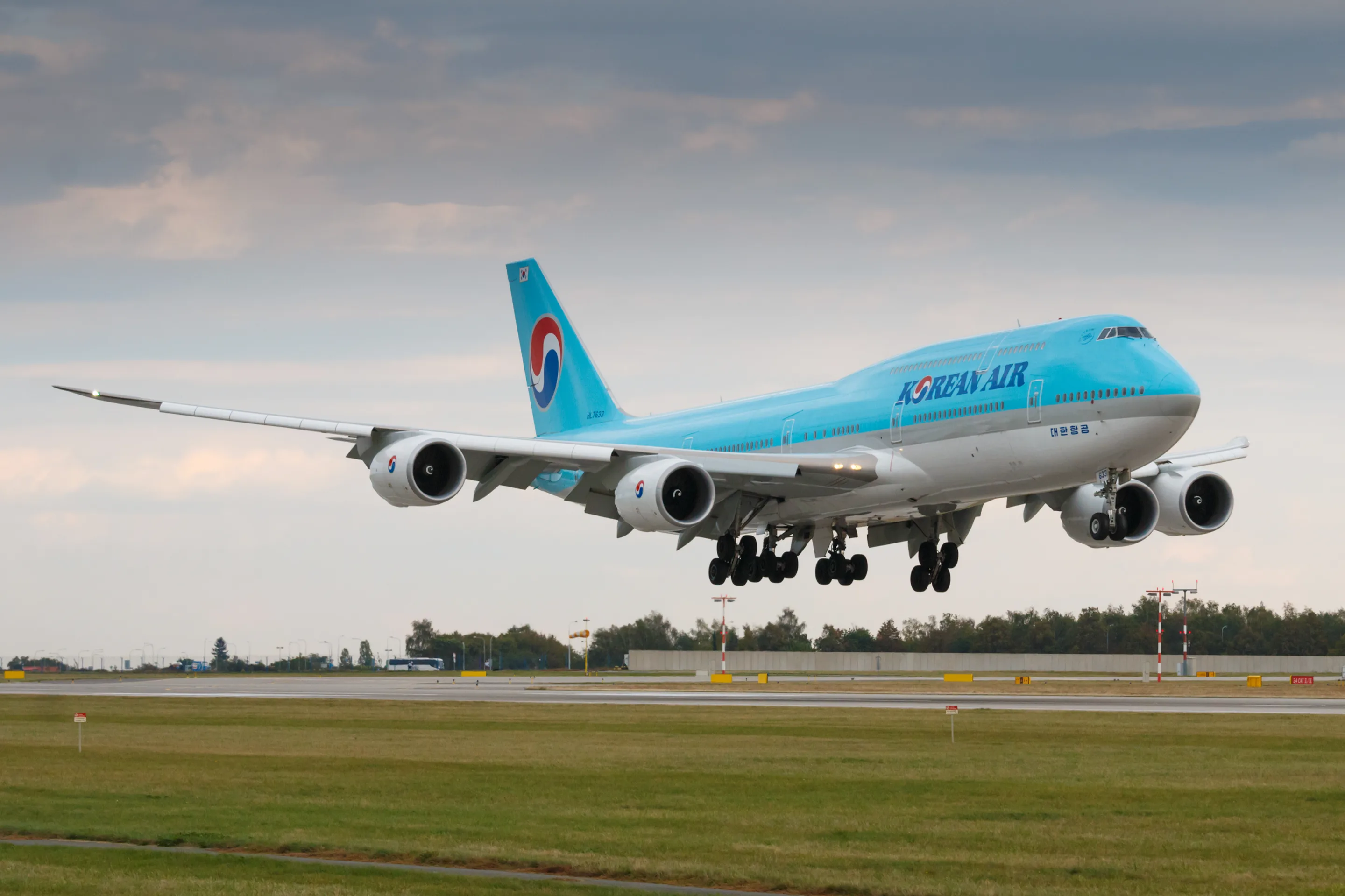
This successful go-live of iCargo marks the beginning of a brand new chapter in Korean Air Cargo. We are excited about the digital journey at Korean Air Cargo using the innovative capabilities of the iCargo product.
Client overview
Korean Air Cargo is the specialized airfreight division of Korean Air. One of the top 5 global air cargo carriers, Korean Air Cargo operates from Incheon Airport - its global hub - using a combination of dedicated freighters as well as the belly capacity of its passenger fleet to move cargo.
The global operations cover over 130 destinations supported by over 1000 staff across 200 offices.
The context
Korean Air Cargo relied on a combination of core mainframe systems integrated to 35 satellite systems to drive its air cargo business division deliver customers' cargo shipments from origin to destination. Together, the mainframe and the satellite systems held the business logic as well as the data generated by the system integrated with each other on a point-to-point/ ad-hoc manner.
The cargo IT system was hosted in-house and maintained by the internal IT team in line with IT strategies of most large corporations of the '70s and '80s. It helped the airline remain competitive by implementing new requirements as and when required.
By 2016, Korean Air Cargo had become a market leader in air cargo. However, this leadership position was at risk owing to the legacy system's inadequacy in addressing the vastly different emerging global business models, competitive landscape, customer requirements and demands.
Korean Air Cargo embarked on an ambitious business transformation program in 2017, aiming to transform its air cargo business completely – including the processes as well as the IT systems servicing customers. The airline was looking for the right solution that would help increase revenue, improve productivity and customer service, connect with business partners as well as follow global business standards and compliance requirements.
IBS Software offering: iCargo full suite of modules to support
- Sales, Capacity, Rates, Pricing
- Cargo Revenue Management
- Import, Export, Warehouse Ops
- Revenue Accounting
- Mail Handling & Accounting
- Cargo Portal, Mobility Solution
Challenges
Revenue stagnation
Additional avenues for improving revenue from the cargo business needed to be found. The business IT system was unable to support the new processes and infrastructure required to offer innovative products and value-added services to customers. This posed a challenge to generating additional revenue for the carrier.
Lower automation leading to delays and revenue leakage
The waiting time between key systems for data processing and batch job processing delayed the overall shipment planning, from booking enquiry to final delivery. Rules-based process automation was next to non-existent, which meant that Korean Air Cargo was budgeting, planning and working in silos of inefficiency.
Increasing maintenance cost
The legacy mainframe systems were out of vendor support and required costly maintenance to keep the old codebase support current business. Changes made to the system over many decades by multiple teams meant that maintainability was highly dependent on costly resources that were disappearing fast, being replaced by new generation technology solutions.
Difficulty in adding new system capability
The IT landscape was cluttered with mainly point-to-point integrations between legacy and satellite systems, of which there were 35. The core, as well as satellite systems, required extensive person-days to launch new capability to support business requirements. This along with the extensive testing needed before release was posing a clear business and operational risk.
Technological obsolescence
The outdated technology framework was unviable to implement new generation business practices, where collaboration with partners through digital tools and platforms is the norm. It had become next to impossible, at least commercially, to make the system ready for e-Freight, piece-level tracking and the increased levels of technology-assisted automation that helps transform global businesses.
The solution
iCargo simplified Korean Air Cargo's IT landscape by replacing 35 independent systems with a single fully integrated cargo management solution suite covering end-to-end business functions required for running its air cargo business. Korean Air Cargo's IT landscape transformed from command-line text-based green screen IT systems of the '80s to a new generation fully integrated, automated and mobile cargo IT platform that is easier to learn, operate and access from anywhere; be it desktops, the latest smartphones and tablets, or purpose-built Android hand-held devices.
iCargo now provides Korean Air Cargo all key business functions that handle cargo sales, capacity planning, revenue management, AWB operations, manifesting, import & export operations, warehouse management, quality management, station cashiering, ULD management, customs, airmail handling & accounting and cargo revenue accounting. All key business functions are seamlessly integrated within iCargo from the point of enquiry for transportation to the end delivery of the shipment to the consignee. It generates all necessary documentation, files and sends them electronically to required parties, posts accounting entries and compiles the necessary data for reporting. Business partners are now integrated through the online booking portal that doubles up as the go-to place for shipment tracking with detailed milestone information available for every customer.

The iCargo Revenue Management solution based on big data architecture, provides an extensive set of use cases for Korean Air Cargo to achieve optimal revenue from its shipments. It provides insights on performance of the cargo business on various KPI's, thereby enabling continuous business improvement.
With iCargo, Korean Air Cargo is now empowered with new generation digital capabilities on all facets of the cargo business - sales, operations, revenue management and revenue accounting - combined with industry initiatives around e-freight, e-AWB, and Cargo iQ to drive its business goals. Hosted out of the world class IBS data center in Japan (primary site) and disaster recovery site from AWS in Korea, Korean Air will have unmatched application availability taking care of business 24X7.
The implementation
Effective transformation of Korean Air Cargo's legacy business IT capability to the new generation iCargo platform-based solution required that the iCargo product is introduced in a planned and timely manner to the user community to get maximum end-user buy-in. IBS Software worked closely with Korean Air Cargo business and IT team to achieve this massive transformation exercise within 18 months from start to go-live which is the shortest possible time frame ever achieved by any airline with the size and scale of Korean Air Cargo.
Early scope definition and requirements freeze, and Korean Air Cargo's preference to follow the global standard business practice of not customizing the iCargo solution arrested project scope creep and delays. The fixed go-live date ensured that all project milestones and support tasks were aligned to be on target. Multiple product review sessions prior to the UAT phase helped monitor the development more closely and enabled early buy-in from the user community. Day-in-life testing ensured that iCargo delivered user and business expectations.

The extensive training provided to Korean Air Cargo key business users by IBS Software product consultants and the subsequent training of end-users by Korean Air Cargo key business users with IBS Software's support, ensured that every user was ready to be productive from day 1 of application go-live.
iCargo went live at Korean Air Cargo on 1st April 2019. Multiple cut-over rehearsals, data center readiness checks and deployment of IBS Software support teams in key stations, combined with IBS Software's extensive expertise in doing global cut-overs similar in size and scope of Korean Air Cargo, ensured a smooth transition from legacy to new generation business IT solution for Korean Air Cargo.
The outcome
The iCargo solution transformed Korean Air Cargo's business IT to a new generation GUI-based solution accessible anytime, anywhere, and on a device of their choice. The new solution will enable Korean Air Cargo to achieve all key objectives that it has set for the new Cargo Service System to deliver.
Key results
Higher shipment yield
The iCargo solution empowers the business user to make informed decisions on shipments such that overall yield remain high at the lowest cost factor. With the deployment of the O&D pair (Origin & Destination) based revenue management system, Korean Air Cargo will be able to tap into the rich set of data to provide meaningful direction to set the prices and keep the yield & revenue performance high.
Improved customer satisfaction
Integrated revenue management capability helps Korean Air Cargo to analyze the profitability of every shipment at the time of booking itself. Based on business rules and parameters, Korean Air Cargo will be able to confirm the booking to the customer in real-time, leading to better customer convenience and satisfaction.
Improved cash flow
With the ability to do advance online checks through the portal and view billable AWBs in real-time, Korean Air Cargo can bill right, on time, every time. iCargo enables electronic exchange of billing and settlement data, thereby improving collections and overall cash flow.
Improved productivity
Rules-driven processes in the fully integrated iCargo solution ensure that routine processes are automated, thereby saving time. GUI-based application screens carry all the information necessary for users to carry out important tasks in a single screen without needing to switch back and forth with multiple applications, thereby reducing the number of errors and associated revenue leakage. Redundant processes between application and on the production floor were identified and eliminated. This, combined with the flow of information through a single application between different functional departments, ensure that resources are not duplicated and are performing at optimum level. The integrated application data from sales, operations and accounting provides business insights, with reports available on key performance matrices defined by Korean Air Cargo.
Improved product and value-added service for upselling capability
The iCargo solution helps Korean Air Cargo introduce products and value-added services quickly to its portfolio of offerings to customers. These are tied to assured milestones and benefits, and provide an excellent upselling opportunity, thereby improving revenue potential as well as being a competitive differentiator.
Rich digital collaboration with partners
With iCargo, Korean Air Cargo is fully ready for e-Freight and digitally exchanging more than just messages with partners for increased collaboration, thereby expanding the scale of business and operations at a lower cost.
Embracing global business practices and working with the global best
With over 30 global customers including almost all of the global top 10 cargo airlines and handlers, the iCargo solution implements global best practices for effective management of air cargo businesses. Korean Air Cargo stands to benefit from its long term association with iCargo and the ever-growing iCargo user community that is representative of how successful airlines and ground handlers are doing business in this digital age.

